
The Role of Interior Design in Manufacturing Efficiency
Design Strategies That Increase Output, Reduce Waste, and Improve Workflow
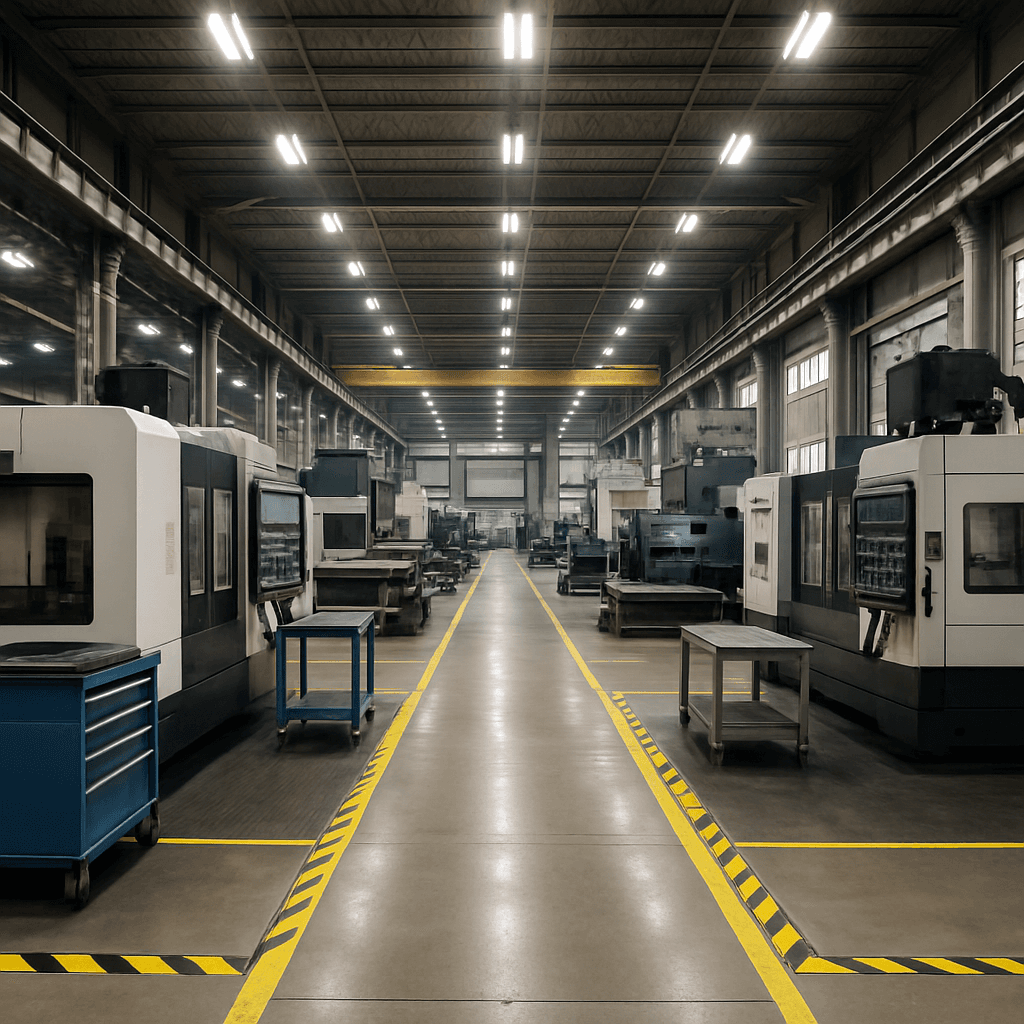
Manufacturing performance is not driven only by machinery, labor, or automation. The environment itself accelerates or slows the entire production line. Interior design in manufacturing is a performance tool. Every layout decision influences output, error rate, movement, safety, and downtime. Companies that ignore design lose efficiency without realizing why. Niyo Creations treats manufacturing interiors as functional systems engineered for precision.
Manufacturing efficiency depends on four pillars. Workflow clarity. Ergonomics. Safety design. Environmental control. If a facility design strengthens these four, production becomes smoother, faster, and more predictable. If it weakens them, the team wastes time, energy, and resources.
Workflow clarity starts with layout planning. The layout determines how materials enter, move, and exit the space. Poor layouts create bottlenecks. Workers cross paths. Machines form choke points. Tools become hard to access. A strong layout uses linear flow patterns and eliminates unnecessary movement.

About Tabani Jama
Project ManagementJama has over 15 years of experience in sustainable architecture and urban planning.
Designing Public Spaces That Handle High Traffic Without Falling Apart
Tabani JamaWhy Most Exhibition Booths Fail to Attract Visitors
Tabani JamaSubscribe to our updates
Stay up to date! Get all of our resources and news
delivered straight to your inbox.